thoughts about fiction & reality after reading Nihao, Oishii Tokyo Biyori
· 4-minute read
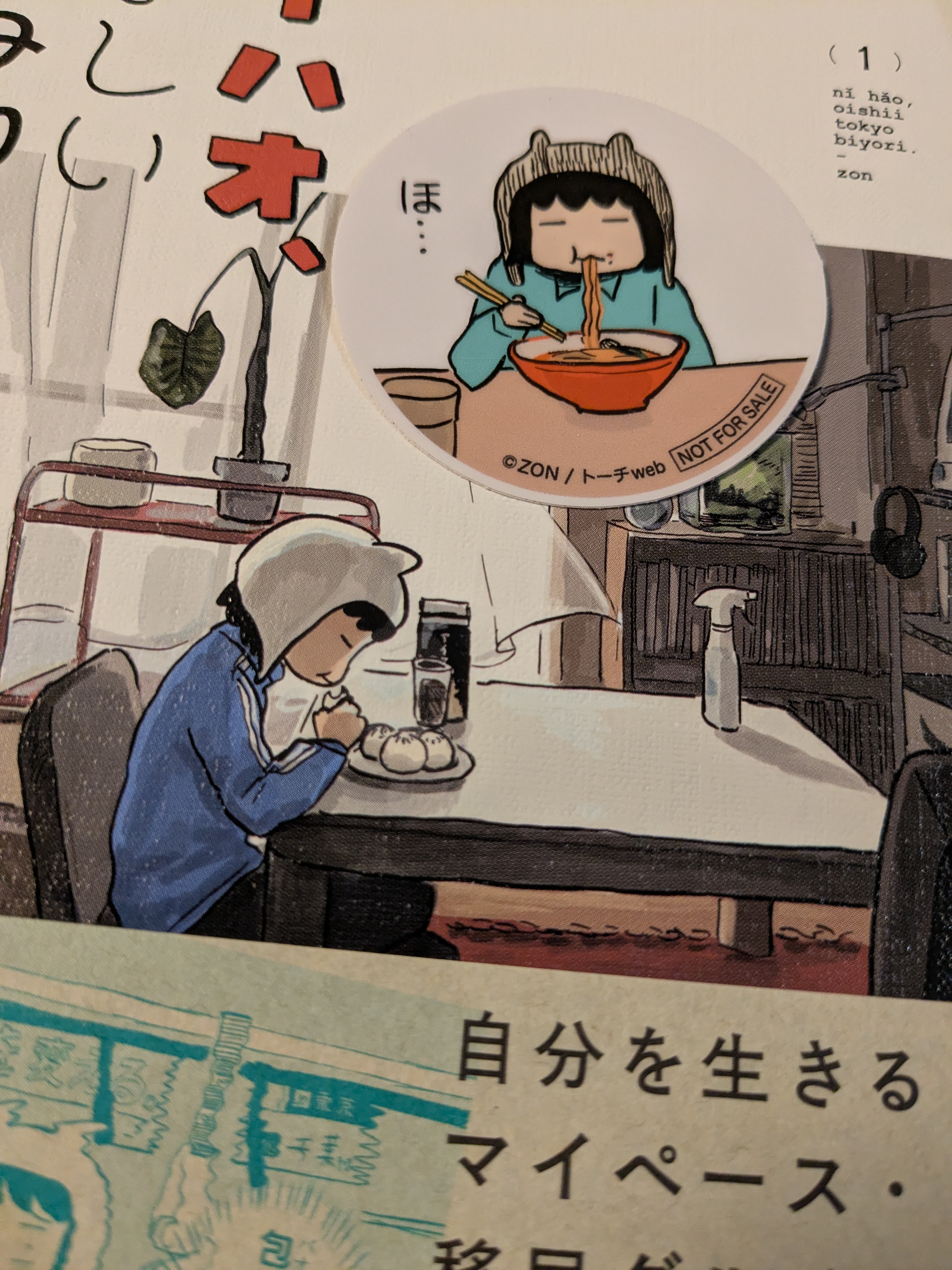
i recently watched the stream of a talk event by ZON and Nakamura Masato about their books. i've been reading ZON's Nihao, Oishii Tokyo Biyori online, so i was really looking forward to the event.
i read through volume one & got to enjoy the chapters i read online again. i really think it's a wonderful manga. the protagonist comes from china and lives in tokyo, eating various foods, which ends up surfacing the stories of various immigrants around them. my own background is a bit similar in some ways and the food in the manga really looks delicious - i love how i can see parts of tokyo i myself am unfamiliar with.
if you haven't read it, chapter 1 is available on torch web!
after rereading the manga, one of the questions that came up at the talk event came back to me.
at the event, somebody asked about whether the events & characters in the manga were fictional, & people seemed surprised that they were, but i was surprised people were surprised, & also not sure why the question was asked.
one of the reasons i like Nihao, Oishii Tokyo Biyori is how real it feels, but i think actually reality often feels less real than fiction.
perhaps people who don't often create stories themselves might think it's easier to write reality as it happens, but that's not actually possible.
even if you are writing down something that happened to yourself, all you can write down is how you experienced it - what YOU saw, what YOU heard, what YOU felt...
"but isn't that writing reality down?" no. you can't experience something objectively. experience is by nature subjective, & we humans know reality through our experience of it.
say it's release day for some very popular merch. somebody gets the very last box on the shelves. from the viewpoint of the person who got it, they're the story's protagonist - they got the goods! but from the viewpoint of the person right behind them, they might be the villain - that guy got the last box (& i didn't)! what happens in reality doesn't change, but the story does.
the 'real'ness that people often say they want from fiction isn't just writing down facts - it's making people feel like something could have happened, & to make people feel that, the story has to make them feel like they can experience it.
that's what makes fiction so strong, in my opinion. authors create stories by making readers feel them. even if a story draws from something that happened in real life, it's only taking a crystal of the feelings around the event to bring out the reality of it - it's not showing the objective facts of it, since that's impossible (& not what people actually really want from a story.
but anyway, why i wanted to write this blog is i want to say, as another minority who writes stories about minorities, just because something is fiction doesn't mean what's in it isn't actually happening in the real world.
there's shows that are all like "wow listen to the hardships these real people who are minorities face!" that consume the stories of minorities for entertainment, but i really don't think, at least on the reader side, that we should be asking minorities to actively do this.
if somebody wants to share their personal experiences, of course that's fine! but as the audience, being like 'you have to tell your story' &c. can just end up forcing people into being unwilling participants of inspiration porn.
i feel like questions like whether what happens in a story is "real" or not often happen at talk events with minority creators, & it kind of feels like the person asking wants to hear about how the creator has suffered. even if it is based on the creator's experiences, they might not want to talk about it. sometimes people can share painful experiences through art that they might not be comfortable just talking about in front of an audience.
anyway, what i want to say is if you ever end up feeling like you want to ask whether some painful experience in a work actually happened or not, ask yourself why you want to ask before actually asking the question.