steam discoverability and reviews
· 7-minute read
essentially A YEAR OF SPRINGS & a pet shop after dark (released 2021 & 2022) have kept me afloat steam-wise haha & without them i probably wouldn't still be doing games (A TAVERN FOR TEA is in the same review# bucket as pet shop, but it's 3 USD so even with more sales it doesn't make as much)
— kc 💀 TRUE LOVE'S CURSE coming to steam! (@npckc.net) 2026-03-13T01:52:44.443Z
i posted this on bluesky but i ended up having more thoughts so to avoid just having a long thread of replies, i'm going to write things up in a proper post, starting off with summarising what i've already posted in the thread.
taylor, another indie dev who's made some cool games, one of which is witching stone which i had the pleasure of writing some story bits for, shared a graphic sharing his games with their review count overlaid on a chart showing steam game releases by review.
i did the same in a quote with my paid games, for which i'll share the data below:
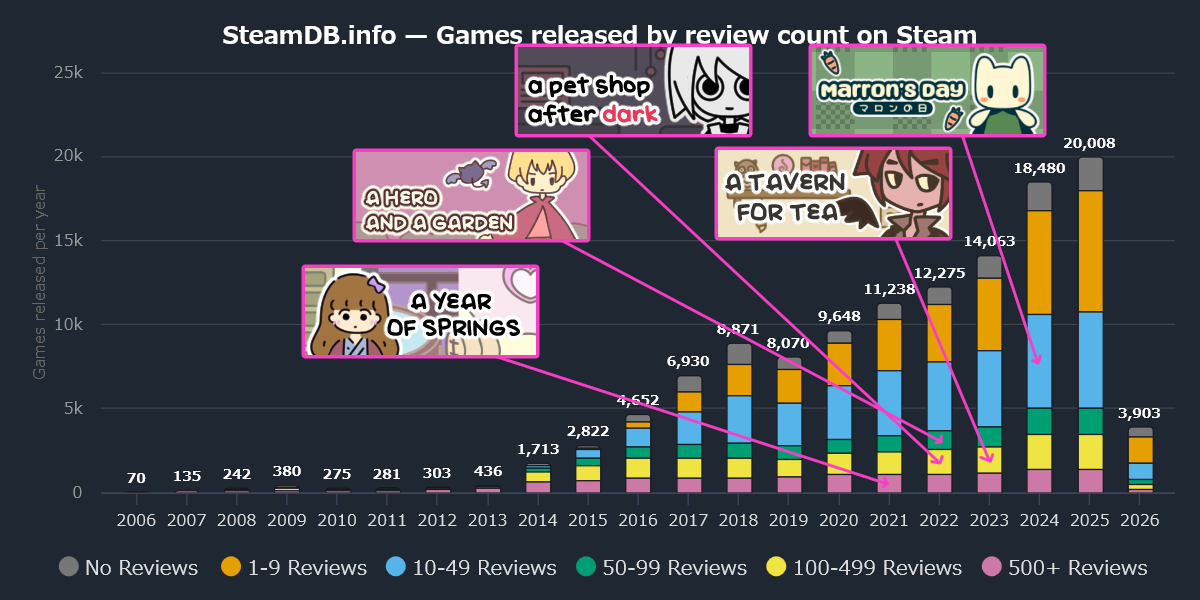
- A YEAR OF SPRINGS (2021, 500+ reviews)
- A HERO AND A GARDEN (2022, 50-99 reviews)
- a pet shop after dark (2022, 100-499 reviews)
- A TAVERN FOR TEA (2023, 100-499 reviews)
- Marron's Day (2024, 10-49 reviews)
for me, steam revenue is pretty directly correlated to the number of reviews, so essentially A YEAR OF SPRINGS & a pet shop after dark (released 2021 & 2022) have kept me afloat steam-wise haha & without them i probably wouldn't still be doing games, at least not on steam.
both A YEAR OF SPRINGS and a pet shop after dark still sell fairly consistently even 4 or 5 years respectively after their release. i appreciate this a lot since i am a full-time indie dev, & if i don't sell games, i don't have money to buy food, pay bills, &c.
but i remember how at the beginning, A YEAR OF SPRINGS didn't sell very much at all. in fact, it only really started selling more steadily after it was in a steam festival.
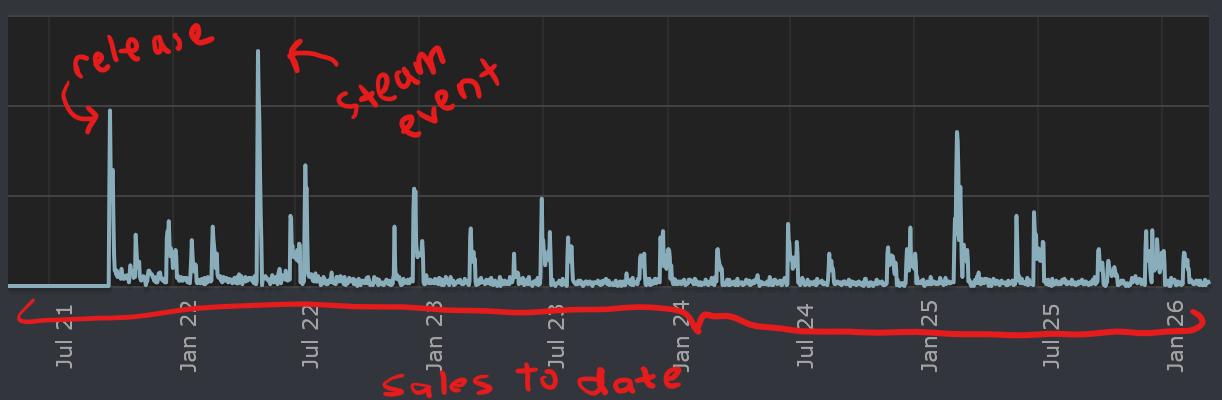
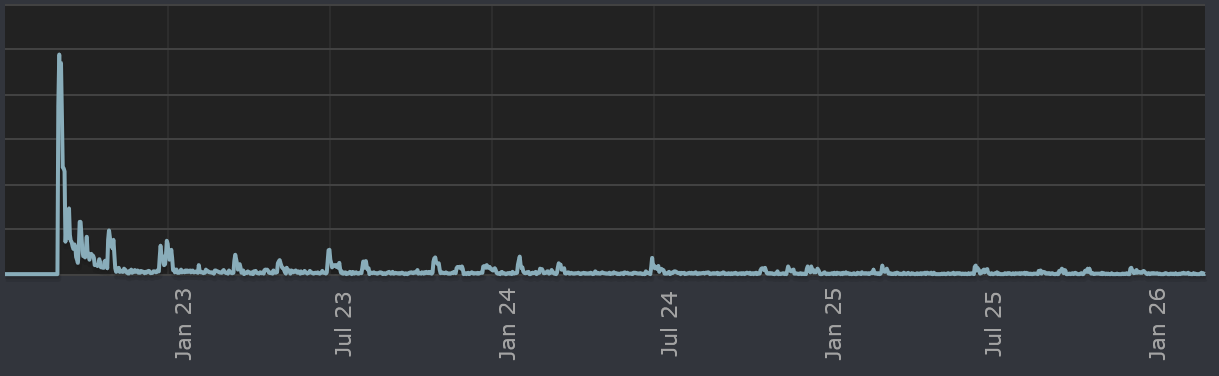
the above chart is for A YEAR OF SPRINGS, but compare it with the below chart for a pet shop after dark, which i think is probably much more typical of games on steam, with the biggest bump during launch, & much fewer sales after that.
i sometimes think about how different things would've been if A YEAR OF SPRINGS hadn't been in the event. the game itself never changed - it's not like i added any content or updated the game at the time of the festival. i think all i did was put it on sale?
but being in the event let people who had never known about the game find out about it - discover it, as such.
i think indie devs worry a lot about discoverability. it feels like there are a lot of things people think work, & maybe they often do make a difference! but the thing is, doing all these things doesn't actually guarantee that people will actually find the game you made.
especially for indie devs who are more like me (making games mostly solo, no budget, no funding, not a company, &c.), a lot of the advice business indies give doesn't even make sense. right about now, i see people debating about gdc & whether it's still worth it as an indie - but gdc was never an option for me, because i could never afford to go.
i don't begrudge people taking the opportunities they have - i think that's awesome! but i also think it can be a bit soul-crushing to see people weighing options that were never even on the scale for you, & i think i'm not alone in feeling this way.
because of stuff like that, to be honest, i don't really look at most marketing advice shared for devs. i have no way of implementing it, & looking at stuff i can't actually do anything about will just bum me out.
that said, one thing that actually does really make a difference is steam reviews. i know steam has said there's no actual algorithmic difference when a game hits 10 reviews, but it's not an algorithmic thing - it's that a player will react differently if they see a game with 9 reviews vs if they see a game with 10 reviews, because with 10 reviews, that's when a game has enough reviews to get a Positive rating.
there are more thresholds which are outlined in the charts above - 50 for Very Positive, 500 for Overwhelmingly Positive. if reviews are negative, you can get Negative &c. too.
for games that already have very many reviews, an extra review makes less of a difference, but for a game that is under 50 reviews, the difference between Positive and Very Positive is big, & for a game that is under 10 reviews, the difference between Positive and nothing is even bigger.
the chart above shows how while the number of games on steam has increased year by year, the number of games getting 500+ reviews has not increased that much. the number of games getting 100-499 reviews has increased by more, but still not all that much either.
i personally do not think that means that the games coming out on steam are less good - but i do think that with more games, it can be harder for people to find your game even if it's a game they would like.
with so many games out there, a player is more likely to choose one that others have already recommended - which is fair! i know that i am more likely to play a game that a friend tells me i will like.
if i see a game i don't know on steam but looks interesting to me, i'll usually check the reviews too, to see what people have thought of it. none of us has infinite time, after all, so we want to spend our time on things we are more likely to enjoy -
& that's where the review comes in. a review is a way for a player to share that a game is worth giving a chance (or that it's not, if it's a negative review).
it's so much easier to give something a chance if it's not a completely unknown. i think that's human nature!
your review could mean the difference between a game dev giving up on steam entirely or continuing to release games on steam for another five years or more.
i know it did for me.